About this place
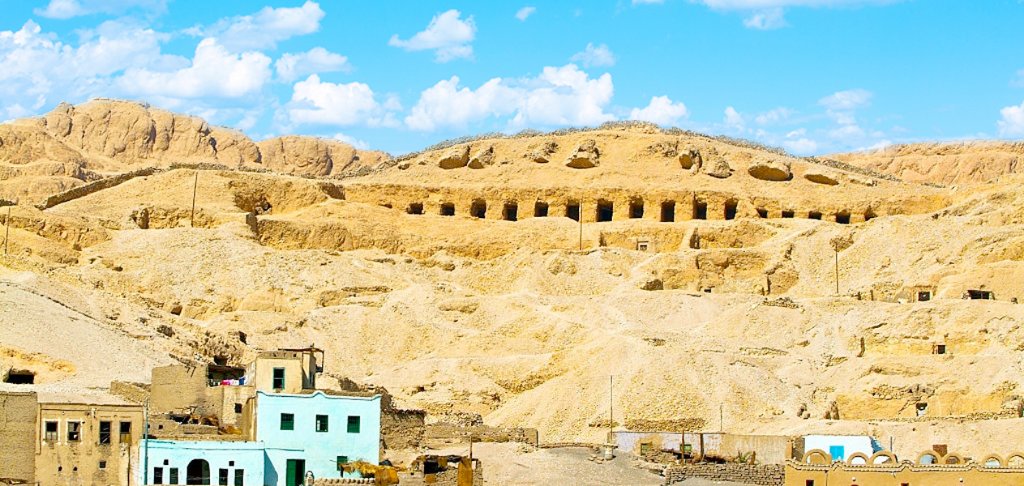
Walk through the ancient village where the artisans and craftsmen who built the royal tombs lived and worked. Deir el-Madina offers a rare glimpse into everyday life in ancient Egypt.

Deir El Madina
Luxor, Egypt
Audio Guide
Listen at your own pace · Available in 3 languages
Valley of Workers at Deir El Madina — English

Deir el-Medina
Deir el-Medina (Egyptian Arabic: دير المدينة), or Dayr al-Madīnah, is an ancient Egyptian workmen's village that was home to the artisans who worked on the tombs in the Valley of the Kings during the 18th to 20th Dynasties of the New Kingdom of Egypt (c. 1550–1080 BC). The ancient name of the settlement was Set maat ("Place of Truth"), and the workmen who lived there were called "Servants in the Place of Truth". During the Christian era the temple of Hathor was converted into a monastery of Saint Isidorus the Martyr (Coptic: ⲡⲧⲟⲡⲟⲥ ⲙ̄ⲫⲁⲅⲓⲟⲥ ⲁⲡⲁ ⲓⲥⲓⲇⲱⲣⲟⲥ ⲡⲙⲁⲣⲧⲉⲣⲟⲥ), from which the Egyptian Arabic name Deir el-Medina (Monastery of the City) is derived.
At the time when the world's press was concentrating on Howard Carter's discovery of the Tomb of Tutankhamun in 1922, a team led by Bernard Bruyère began to excavate the site. This work has resulted in one of the most thoroughly documented accounts of community life in the ancient world that spans almost 400 years. There is no comparable site in which the organisation, social interactions, working and living conditions of a community can be studied in such detail.
The site is on the west bank of the Nile, across the river from modern-day Luxor. The village is laid out in a small natural amphitheatre, within easy walking distance of the Valley of the Kings to the north, funerary temples to the east and south-east and the Valley of the Queens to the west. The village may have been built apart from the wider population in order to preserve secrecy in view of the sensitive nature of the work carried out in the tombs. It is a UNESCO World Heritage Site.
🧠 Test Your Knowledge
History Quiz
5 questions · Earn a badge
Test your knowledge of what you just heard. Score 60% or higher to earn a quiz badge on your Passport!