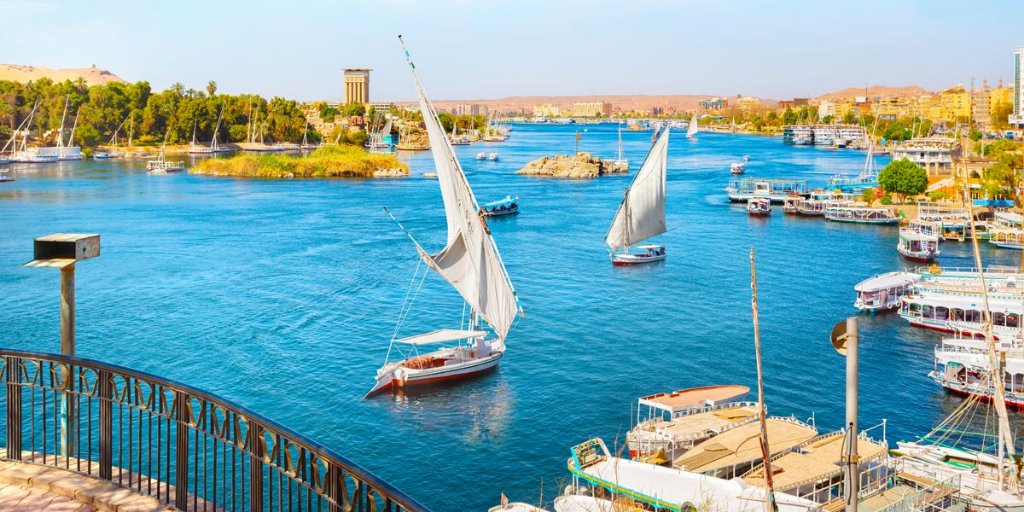
Welcome to the Nubian Village — a window into one of Africa's oldest and most fascinating cultures, preserved along the banks of the Nile around Aswan.
The Nubian people are among the oldest inhabitants of the Nile Valley, with a civilization that predates the pharaohs. Nubia — the land stretching from Aswan south into modern Sudan — had its own kingdoms, its own language, and its own traditions that existed alongside, and sometimes dominated, ancient Egypt. Nubian pharaohs — the 25th Dynasty — actually ruled all of Egypt for nearly a century, around 700 BC.
The construction of the Aswan High Dam in the 1960s was a catastrophe for Nubian culture. The rising waters of Lake Nasser submerged over 40 Nubian villages — the ancestral homeland of over 100,000 people. Communities were relocated, often to unfamiliar environments far from the Nile, and the loss of their land, their cemeteries, and their way of life left deep wounds that are still felt today.
Yet Nubian culture has survived with remarkable resilience. The villages around Aswan — particularly those on Elephantine Island and along the west bank — are famous for their extraordinary painted houses: brilliant blues, turquoises, yellows, and pinks, decorated with geometric patterns, images of the Hajj journey to Mecca, and traditional Nubian motifs.
Nubian hospitality is legendary. Visitors are welcomed with hibiscus tea — karkade — and treated to the warmth of a culture that has always lived at the crossroads of civilizations. Traditional Nubian music, with its distinctive rhythms and instruments, fills the evenings with a sound found nowhere else on Earth.
Visiting a Nubian village by felucca from Aswan — gliding across the Nile as the sun sets over the desert — is one of the most memorable experiences Egypt has to offer.