Egyptian society is shaped by thousands of years of civilization, and many customs and traditions that seem uniquely Egyptian are in fact deeply ancient — expressions of values that have persisted through pharaonic, Greco-Roman, Christian, and Islamic periods.
Hospitality — karam in Arabic — is perhaps the most fundamental Egyptian social value. Guests are sacred. Offering food, tea, or coffee to a visitor is not optional but obligatory. Refusing hospitality can cause genuine offense, and accepting it graciously is one of the most important things a visitor can do.
Family is at the center of Egyptian life. Multi-generational households are common, and the extended family network provides social support, childcare, and a sense of identity. Major decisions — marriage, work, housing — are made within the family context.
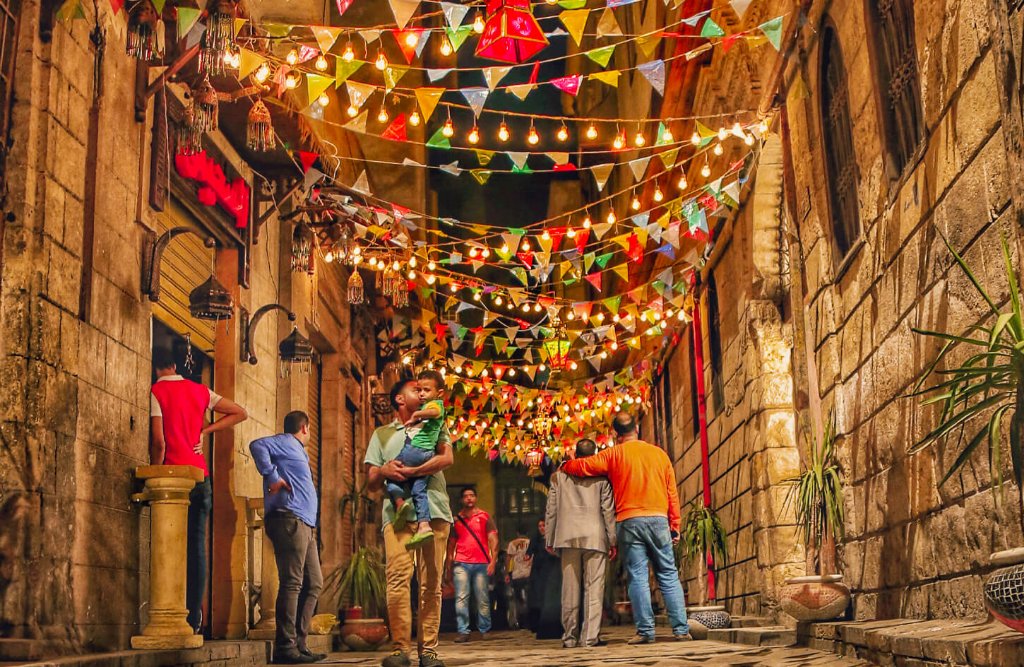
Ramadan is the defining moment of the Egyptian social calendar. During the holy month, Muslims fast from dawn to sunset — no food, water, or smoking. The iftar meal at sunset brings families and communities together, and the streets come alive with lights, music, and celebration through the night. Even non-Muslims participate in the atmosphere of Ramadan, and businesses adjust their hours.
Egyptian weddings are spectacular social events. Traditional weddings can last several days, with music — often a live band playing a mix of classical Arabic and popular music — dancing, elaborate processions, and vast quantities of food. The zaffa — the wedding procession — is one of the most joyful traditions in Egyptian life.
Egyptians have a famous sense of humor — biting, self-deprecating, and endlessly creative — that has helped the culture absorb centuries of hardship. Political jokes, wordplay, and comedic storytelling are national arts.
For visitors, a few guidelines: dress modestly in religious sites and traditional neighborhoods; greet people with 'As-salamu alaykum' ('Peace be upon you'); always use your right hand for eating and greeting; and never refuse a cup of tea.