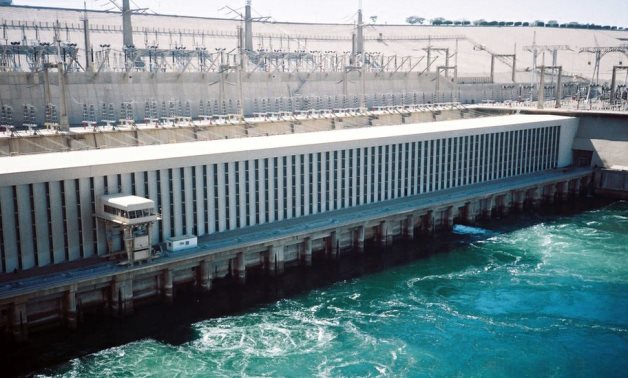
Welcome to the Aswan High Dam — one of the greatest engineering projects of the 20th century, and one of the most consequential decisions in Egypt's modern history.
The idea of controlling the Nile's annual flood had been discussed for generations, but it was President Gamal Abdel Nasser who turned it into reality. Following a dispute with the United States and Britain over financing, Nasser nationalized the Suez Canal in 1956 to fund the project, triggering an international crisis. The Soviet Union stepped in with financing and technical expertise, and construction began in 1960. The dam was completed in 1970, one year after Nasser's death.
The statistics are staggering. The High Dam is 3,830 meters long, 980 meters wide at its base, and 111 meters tall. It contains 17 times the amount of material used to build the Great Pyramid of Giza. The reservoir it created — Lake Nasser — is one of the largest artificial lakes in the world, stretching 550 kilometers south into Sudan.
The dam transformed Egypt. It ended the annual Nile flood that had defined Egyptian agriculture for 7,000 years, allowing year-round irrigation and dramatically increasing agricultural productivity. Its hydroelectric plant generates about 10% of Egypt's electricity. It protects Egypt from both drought and catastrophic flooding.
But the cost was enormous. Over 100,000 Nubian people were displaced when Lake Nasser rose, their villages and ancestral lands permanently submerged. Twenty-two ancient temples and monuments — including Abu Simbel and Philae — had to be relocated in one of the most ambitious rescue operations in history, coordinated by UNESCO.
The dam stands today as a symbol of Egypt's modernization — and of the human price that modernization sometimes demands.